Advantages, Disadvantages and Applications of LiFePO4 (Lithium Iron Phosphate) Batteries
Par NOGIBATTERY
June 9th, 2026
34 vues
Lithium Iron Phosphate (LiFePO4, LFP) batteries are one of the most mainstream lithium-ion battery chemistries. Balancing excellent safety, long service life and cost-effectiveness, they are widely adopted in energy storage, new energy transportation and backup power systems. Compared with traditional lead-acid batteries and ternary lithium (NMC/LCO) batteries, LFP has unique competitive strengths and inherent limitations, which determine its specific application scenarios.
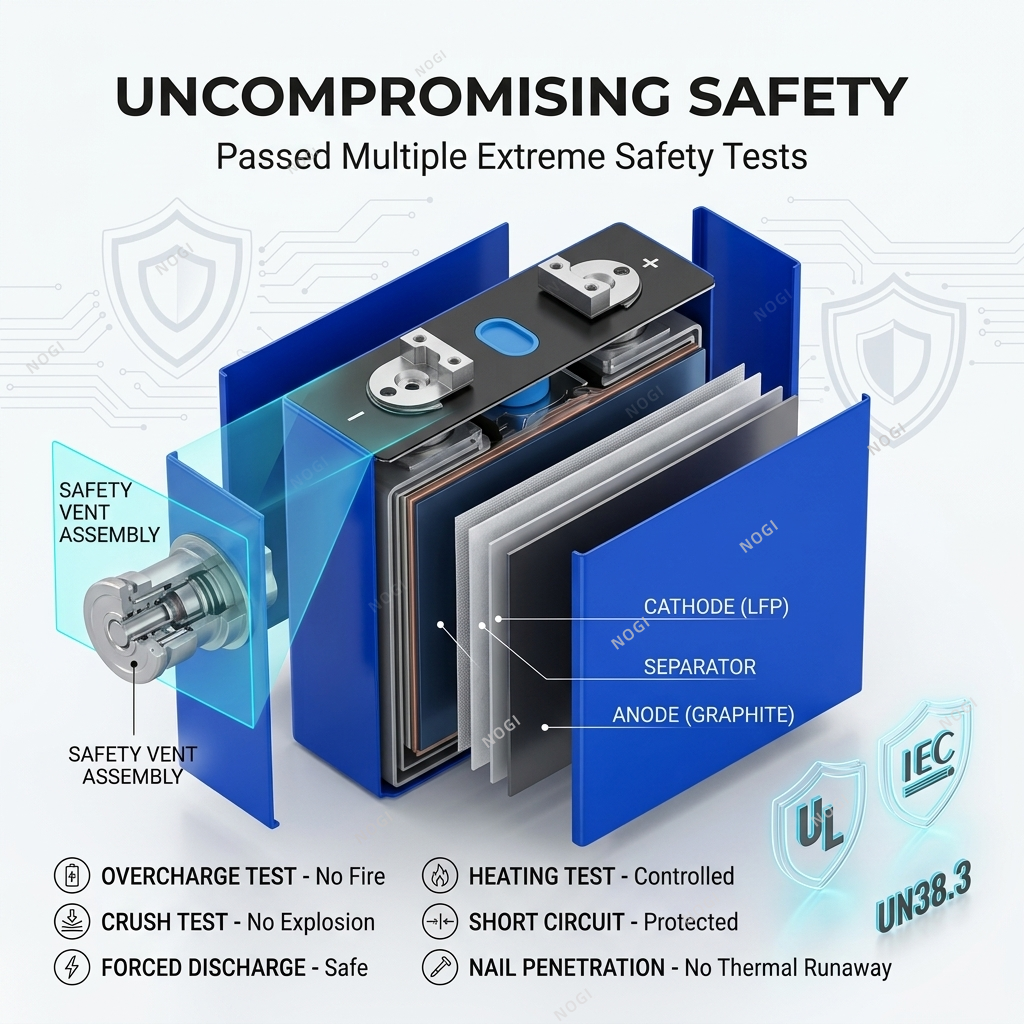
A LiFePO4 (Lithium Iron Phosphate) battery is a safe, rechargeable type of lithium-ion battery that uses lithium iron phosphate as its cathode and graphite as its anode. It has a stable olivine chemical structure, a flat 3.2V cell voltage and contains no toxic cobalt or lead. Compared with other lithium batteries, LiFePO4 features outstanding thermal stability, an extremely long cycle life and low self-discharge. It is widely used for energy storage, electric vehicles and backup power systems due to its high safety and cost efficiency over long-term operation.
I. Core Advantages of LiFePO4 Batteries
1. Exceptional Safety and Structural StabilitySafety is the most prominent advantage of LFP batteries. Thanks to their stable olivine crystal structure, LFP cells feature extremely high thermal and chemical stability, effectively avoiding thermal runaway, overheating, fire or explosion risks. Unlike ternary lithium batteries, they will not release oxygen when overheated. They can withstand extreme conditions including overcharging, short circuits, physical puncture and high-temperature extrusion without dangerous failure or toxic gas leakage, making them one of the safest commercial lithium battery types.
2. Ultra-Long Cycle LifespanLiFePO4 batteries deliver far superior cycle performance than competing battery technologies. Standard LFP cells support 3,000 to 5,000 full charge-discharge cycles, while high-quality versions can reach over 8,000 to 10,000 cycles under partial discharge conditions. In contrast, lead-acid batteries only last 300–500 cycles, and conventional ternary lithium batteries achieve merely 500–1,500 cycles. With a capacity retention rate above 80% after long-term cycling, LFP batteries greatly reduce replacement frequency and long-term operating costs.
3. Stable Flat Discharge VoltageEach LFP cell maintains a steady nominal voltage of 3.2V throughout most of the discharge process, with an extremely flat voltage plateau. This stable power output ensures consistent working performance for electrical equipment until the battery is nearly exhausted, effectively avoiding unstable power and equipment shutdown caused by rapid voltage drop.
4.Eco-Friendly and Non-ToxicDifferent from ternary lithium batteries that contain scarce and toxic cobalt and nickel, LFP batteries adopt iron and phosphate as core raw materials, which are abundant, non-toxic and pollution-free. They produce no harmful substances during production, use and disposal, feature simple and low-cost recycling processes, and fully comply with global environmental protection standards.5. Ultra-Low Self-Discharge RateLFP batteries have an extremely low monthly self-discharge rate of only 2%–3%, far lower than the 5%–15% rate of lead-acid batteries. They can be stored for months with negligible power loss, ideal for long-term standby and intermittent use scenarios.6. Deep Discharge Resistance and Maintenance-FreeLiFePO4 batteries support deep discharge down to 0% without permanent damage, while lead-acid batteries suffer severe attenuation when discharged below 50%. Additionally, LFP batteries require no water replenishment, have no acid leakage risks, and need almost no daily maintenance, greatly reducing manual operation costs.7. Optimized Long-Term Cost PerformanceAlthough the upfront purchase cost is higher than lead-acid batteries, LFP batteries rely on long cycle life and low maintenance costs, resulting in a much lower total cost of ownership (TCO) throughout the full life cycle. Meanwhile, abundant raw materials avoid the price volatility of cobalt and nickel, ensuring stable mass production costs.II. Main Disadvantages of LiFePO4 Batteries1. Relatively Low Energy DensityThe biggest drawback of LFP batteries is their low volumetric and gravimetric energy density, which is 30%–50% lower than ternary lithium (NMC/LCO) batteries. Under the same capacity, LFP batteries are heavier and bulkier, making them unsuitable for lightweight, miniaturized equipment such as smartphones, drones and high-end long-range electric vehicles.2. Lower Single-Cell Nominal VoltageA single LFP cell has a nominal voltage of 3.2V, lower than the 3.6V–3.7V of conventional lithium-ion cells. To reach a common 12.8V battery pack (conventional 12V battery specification), four LFP cells need to be connected in series, while ternary batteries only require three. This increases the complexity of Battery Management System (BMS) design and brings minor compatibility obstacles for partial equipment replacement.3. Poor Low-Temperature Charging PerformanceLFP batteries have obvious low-temperature limitations. Charging standard LFP batteries below 0°C will cause irreversible lithium plating, resulting in permanent capacity damage. To adapt to cold environments, additional self-heating modules or low-temperature cutoff BMS are required, which increases the overall system cost and energy consumption. Although low-temperature discharge is feasible, the available capacity will drop significantly.4. Higher Upfront Initial CostDespite declining market prices, LFP batteries still cost 2–3 times more upfront than lead-acid batteries of the same capacity. For short-term, low-budget projects with frequent replacement tolerance, LFP batteries lack price advantages in initial investment.5. Limited Discharge C-Rate for Standard CellsThough high-power LFP cells are available for EVs and power tools, ordinary prismatic LFP cells have higher internal resistance and lower continuous discharge C-rate than high-end NMC or LiPo batteries. They cannot support ultra-high instantaneous power output, limiting their application in high-performance scenarios such as electric sports cars and high-power racing equipment.
III. Performance Comparison Table: LiFePO4 vs Lead-Acid vs NMC Batteries
|
Feature
|
LiFePO4
|
Lead-Acid
|
NMC (Ternary Lithium)
|
|
Safety Performance
|
Excellent (no fire/explosion risk, non-toxic)
|
Moderate (risk of acid leakage and gas venting)
|
|
|
Cycle Life
|
3,000–10,000+ cycles
|
300–500 cycles
|
500–1,500 cycles
|
|
Energy Density
|
Medium
|
Low
|
High
|
|
Low-Temperature Charging
|
Poor (damaged below 0°C without heating)
|
Fair
|
Fair
|
|
Cobalt/Nickel Usage
|
No
|
No
|
Yes
|
|
Upfront Cost per kWh
|
Medium-Low
|
Very Low
|
Medium-High
|
|
Total Lifespan Cost
|
Low (cost-effective)
|
High (frequent replacement)
|
Medium
|
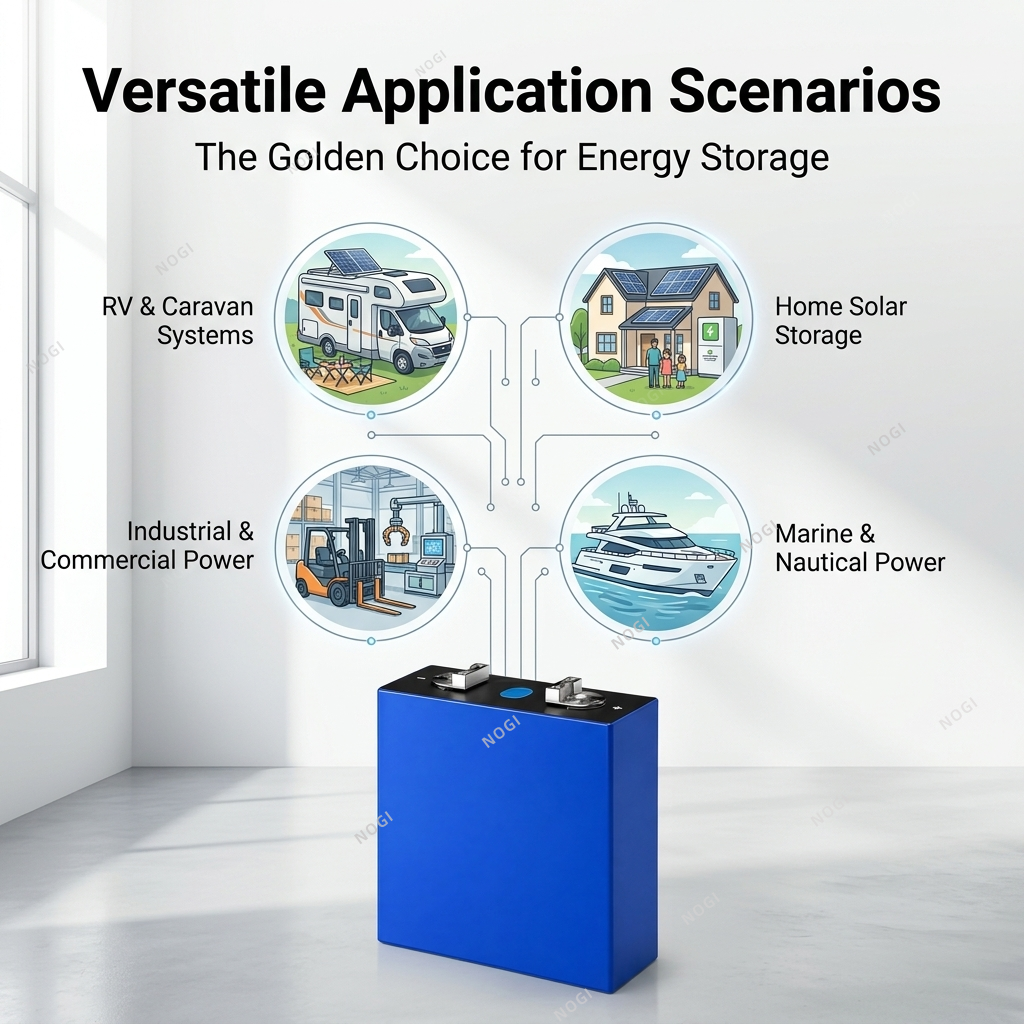
V. Unsuitable Scenarios for LiFePO4 Batteries- Miniaturized lightweight devices such as smartphones, wearable devices and racing drones that require high energy density.- Equipment that requires a precise 3.7V single-cell voltage and does not support BMS voltage adaptation.- Scenarios requiring frequent charging in sub-zero environments without self-heating conditions.- Short-term temporary projects with extremely low upfront budgets and no requirement for long service life.- High-performance electric vehicles and high-power equipment that need ultra-high instantaneous discharge current.
La page précédente
LEV50 Battery Replacement Solution-CALT 93Ah NMC Cell or EVE 58Ah 59Ah nmc cell
En savoir plus
La page suivante
Discharge Ratings And Capacity Tradeoffs In Samsung 50s 21700 Cell Procurement
En savoir plus


